Concrete Contractor Serving Pittsburgh, PA
Outdoor Customs LLC provides concrete and masonry installation throughout Pittsburgh, PA. With more than 20 years of combined experience, our locally and family-owned company installs concrete driveways, patios, walkways, sidewalks, garage floors, basement floors, retaining walls and decorative concrete. We also provide stone veneer and foundation masonry. Every installation is planned around the property’s grade, drainage, access and existing structures. From compact city lots and hillside homes to properties with rear alleys or older foundations, we adapt the project to Pittsburgh’s distinctive building conditions.
Concrete Installation for Pittsburgh’s Older Homes
Pittsburgh’s urban core contains some of Allegheny County’s oldest housing. Many homes were constructed before current grading, drainage and concrete standards became common. Existing driveways, walkways and basement floors may have been installed over shallow bases or altered during multiple renovations.
Older properties can also present limited access, narrow side yards, shared driveways and utilities that are difficult to locate visually. Before beginning an installation, the project area should be evaluated for old slabs, buried structures, fill material, foundation condition and previous drainage changes.
New concrete must connect correctly with existing porches, garages, steps and sidewalks without trapping water against the home. This is particularly important around older masonry foundations, which may already experience moisture movement during prolonged rain.
Planning Concrete Around Pittsburgh’s Hills
Steep terrain is one of the most important differences between Pittsburgh concrete projects and work in flatter communities. Neighborhoods such as Mount Washington, South Side Slopes, Beechview, Brookline and Greenfield contain properties built across significant elevation changes.
The City’s zoning regulations identify natural slopes greater than 20%, landslide-prone areas and soils with high shrink-swell potential as conditions requiring additional review. Retaining walls, drainage improvements or professionally prepared plans may be necessary before concrete can be installed safely. City of Pittsburgh slope regulations
Concrete placed on a hillside requires stable support beneath the slab. Previously placed fill must be evaluated and compacted correctly. Water also needs a controlled path downhill that does not erode the supporting soil, overload a retaining wall or discharge onto a neighboring property.
Our Services in Pittsburgh, PA
WHERE WE INSTALL
Stormwater and Impervious Surface
Pittsburgh Water bases its stormwater fee on the amount of hard or impervious surface on a property. Concrete patios, driveways and walkways prevent some rainfall from soaking directly into the soil and can affect the way stormwater is measured. Pittsburgh Water stormwater fee information
The city is also served in many places by combined sewers that carry both wastewater and stormwater. During heavy rain, excessive runoff can contribute to system overflows. A concrete project should therefore consider where water will go after it leaves the slab.
The best solution depends on the property. Options may include preserving existing swales, directing water toward an approved drainage point or coordinating concrete with other stormwater controls. Water should not be directed toward a neighboring foundation, unstable slope or public sidewalk.
Working on Compact City Properties
Concrete installation in Pittsburgh often requires more logistical planning than work on an open suburban lot. Narrow streets, limited parking, steep driveways, rear alleys and restricted side-yard access can affect demolition, material delivery and concrete placement.
Access should be evaluated before the project is scheduled. The plan may need to account for equipment size, concrete delivery distance, street restrictions and protection of neighboring property. Addressing these issues beforehand helps the installation proceed more efficiently.
Pittsburgh Concrete Permit Requirements
The City states that retaining walls four feet or less in height generally do not require a building permit unless they support an additional load or meet another listed exception. Certain sidewalks and driveways no more than 30 inches above adjacent grade may also be exempt from a building permit. Zoning or right-of-way approval may still be required. Pittsburgh work not requiring a permit
All new curb cuts require a permit from DOMI, including those providing access to residential garages, driveways and parking pads. Pittsburgh recommends applying for right-of-way permits several weeks before work begins. Permit requirements should always be confirmed through OneStopPGH before construction.
Concrete and Masonry Services in Pittsburgh
01
Concrete Driveway Installation
Pittsburgh driveways range from level suburban-style entrances to steep, narrow approaches leading to integral garages. Each driveway should be planned around vehicle clearance, garage elevation, sidewalk crossings, street drainage and winter traction.
Proper excavation and base preparation help support vehicle weight and reduce settlement. Control joints are positioned to manage shrinkage, and the finished surface is graded to limit standing water. On steep driveways, surface texture becomes especially important during snow and freezing conditions.
02
Concrete Patio Installation
A concrete patio can make a compact Pittsburgh yard more functional. Depending on the property, the patio may need to fit between the home and a retaining wall, work around a basement entrance or remain accessible through a narrow side yard.
Door thresholds, downspouts and foundation elevations should be reviewed before determining patio height. The surface should move water away from the house without creating runoff problems on an adjoining lot.
03
Walkways and Sidewalks
Private walkways can improve access between the street, driveway, entrances and backyard. Public sidewalk work requires additional attention because sidewalk dimensions, slope, joints and materials may be governed by the Department of Mobility and Infrastructure.
If a City-owned tree is lifting a sidewalk, Pittsburgh instructs property owners to contact both the Forestry Division and DOMI before beginning repairs. Root pruning and a sidewalk repair permit may be required. Pittsburgh sidewalk repair guidance
04
Garage and Basement Floors
Garage floors must withstand vehicle loads, moisture, melting snow and deicing residue. Basement floors require careful evaluation of the foundation, subbase and existing moisture conditions. Older Pittsburgh basements may contain uneven slabs, multiple layers or evidence of previous drainage work that should be examined before new concrete is placed.
05
Decorative Concrete
Stamped concrete can recreate the appearance of stone, brick or slate, making it suitable for patios, walkways and entrances. Exposed aggregate provides visible stone and a naturally textured surface. Finish selection should account for the home’s architecture, surrounding masonry, required traction and expected winter use.
06
Retaining Walls and Masonry
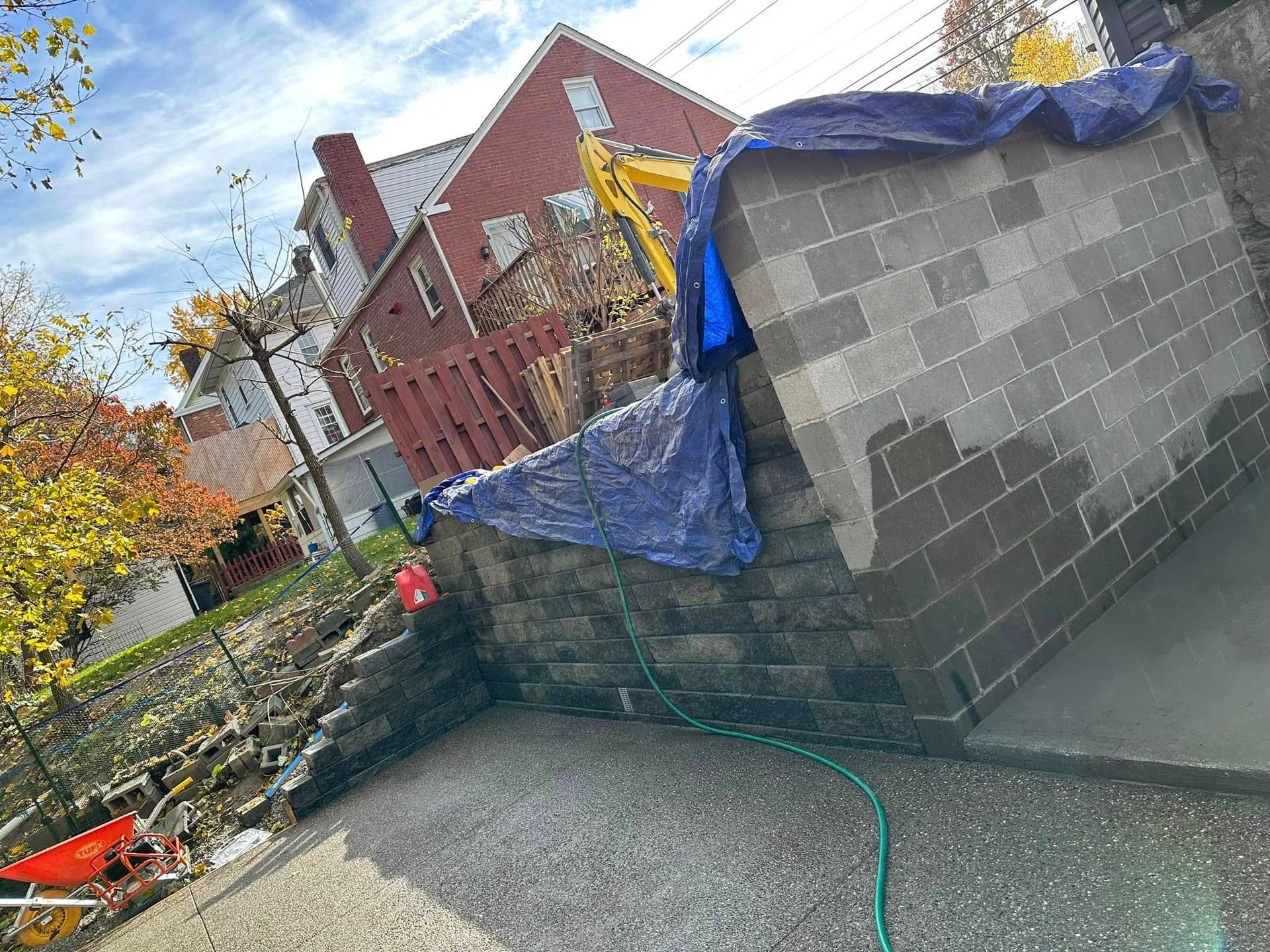
Retaining walls are frequently necessary on Pittsburgh properties because of the city’s slopes and compact lots. A wall must be designed around the soil it supports, the height of the grade and the presence of nearby driveways, structures or property lines. Drainage behind the wall is essential for relieving water pressure.
Outdoor Customs LLC also provides stone veneer for foundations and architectural features, along with foundation masonry appropriate for the property’s structural and exterior needs.
TESTIMONIALS
What Our Customers Say
Why Choose Outdoor Customs LLC?
Outdoor Customs LLC brings more than 20 years of combined concrete and masonry experience to Pittsburgh properties. We provide free estimates within two to four business days, competitive pricing and recommendations based on the project area’s actual conditions. Our team prioritizes proper preparation, drainage and communication from the initial estimate through the completed installation.
Contact Outdoor Customs LLC to request a free estimate for concrete or masonry installation in Pittsburgh, PA.
Frequently Asked Questions
Does a concrete patio require a permit in Pittsburgh?
It depends on the patio’s height, location and proposed use. Concrete installed directly on grade may be exempt from a building permit, but zoning review can still apply, particularly when the surface will be used for vehicle parking or affects required setbacks. Confirm the project through OneStopPGH before installation.
Do I need permission to add or widen a driveway entrance?
Yes, a new curb cut requires DOMI approval. Modifying an existing curb cut may also require review. The City evaluates factors such as curb-cut width, property frontage, nearby intersections, utilities, street trees and pedestrian safety.
When does a retaining wall require a building permit?
Retaining walls over four feet generally require a building permit. A shorter wall can also require one if it supports a surcharge, such as a driveway, structure or significant additional load. Hillside and landslide-prone properties may require geotechnical or engineering documentation.
How should drainage be handled on a hillside property?
Water should be collected or redirected before it can saturate supporting soil or build pressure behind a retaining wall. The appropriate solution may include drainage stone, wall drains, surface grading or an approved discharge route. Water should never be released onto an unstable slope without evaluating the consequences.
Can concrete be installed when access is limited to an alley?
Often, yes, but the access route must be evaluated first. Alley width, overhead clearance, pavement condition, parking restrictions and the distance from the concrete truck to the project area can affect the installation method. Planning access early prevents avoidable delays.